
'The Prettiest Star' by Carter Sickels
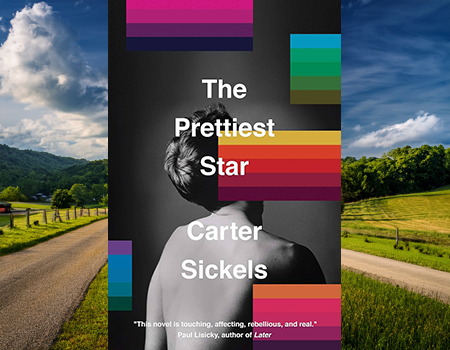
Author: Carter Sickels
Rating: A
Vibe: A devastating, beautiful novel about a young man returning home to die—and the family forced to reckon with who he is before they lose him. It's about AIDS, yes, but it's about so much more.
I know. Another book about a gay man dying of AIDS in the 1980s. It's a story we've seen before—on screen, on stage, in countless novels. But The Prettiest Star offers a perspective that feels genuinely fresh—not by sidestepping the crisis, but by expanding the frame. This is a book about AIDS and about family, forgiveness, small-town prejudice, chosen family, and the gap between the lives we imagined and the ones we got. It honors the history while refusing to let it become the whole story.
Carter Sickels's novel follows Brian Jackson, a 24-year-old documentary filmmaker who returns to his small Appalachian hometown of Chester, Ohio in 1986 after his boyfriend dies of AIDS in New York. Brian is sick too—late-stage, with nowhere else to go—and he comes home to a family that has never fully accepted that he's gay. What follows is a story about what happens when a community turns on its own, when parents are forced to confront a truth they've long refused to see, and when forgiveness and prejudice exist side by side without resolution.
The novel is told through three rotating perspectives: Brian, who documents his final summer through video diaries; his mother, Sharon, who is caught between her son and a husband who won't acknowledge reality; and Jess, Brian's fourteen-year-old sister, who watches her world fracture in real time. The structure gives the book tremendous emotional range. We see Brian's grief and defiance, Sharon's paralysis and halting steps toward acceptance, and Jess's loss of innocence as she witnesses the ugliness of people she once trusted—neighbors, churchgoers, even family. Whether or not Jess is straight, she will never be the same person she was before this summer. Seeing how prejudiced even people we care about can be is a rude awakening—the kind that changes your views on everything from religion to your own family.
Sharon is the character I keep returning to. You love her and hate her, sometimes in the same chapter. Watching her come to terms with her son's sexuality only as she's losing him is devastating—and painfully familiar. Many of us know what it's like to want to forgive a parent for the hurtful things they've said or done while struggling to extend them the grace of their own limitations. Sickels doesn't let Sharon off the hook, but he doesn't demonize her either. She's a mother failing her son in ways she can barely articulate, and the tragedy is that by the time she begins to understand, it's too late.
And then there's Lettie—Brian's grandmother—who emerges as his fiercest defender. When the town shuns him, when his father retreats into silence, when even his mother can't find the words, Lettie opens her arms. This landed hard for me. When I came out, my grandmother was the only person in my family who showed me kindness. Everyone else pulled away; she pulled me closer. Seeing that dynamic in the book felt like recognition—like Sickels understood something true about how love can skip a generation when it needs to.
The book also honors a piece of queer history that deserves more attention: the role of chosen family, and specifically the lesbians who stepped in to care for gay men during the crisis. Brian's best friend Annie—a very out lesbian—travels from New York to Ohio to help him, bracing him against the homophobia he faces daily. It's a small thread, but an important one. The families we build sometimes show up in ways the families we're born into cannot.
Sickels's prose is arrestingly beautiful without being overdone. The dialogue feels natural, the period details are precise without being showy, and the flashbacks to Brian's life in New York—nights of carefree abandon, young men with their whole lives ahead of them—are both a gift and a knife. You read those scenes knowing what's coming, even as the characters don't. Brian and his boyfriend making plans to travel the world. A whole life stretching out in front of them. That dramatic irony gives the novel a mournful, elegiac quality that never lets up.
But it's not just Brian mourning what could have been. Sharon had her own vision—her son playing baseball, growing closer to his father, a life she could understand and be part of. Every character in this book is reckoning with the gap between the life they imagined and the one they got. That's what makes The Prettiest Star feel so universal even as it's rooted in a specific time and place. We all carry those unlived lives with us. We all know what it's like to look back and wonder what might have been.
And Brian's video diaries—the device that structures his sections of the novel—work beautifully. There's an intimacy to them, a sense of someone trying to document his own life before it's gone. By the end, I wanted desperately to watch his film, to see the footage he was making. That's how real it felt.
A neat ending would have felt false, and Sickels is too honest a writer for that. Prejudice and forgiveness coexist here without tidy resolution. Some relationships mend; others don't. That's life—and it's what makes this book ring true.
I won't pretend this book didn't break me. It did, fully. But it also reminded me why I do this—why I read, why I write about what I read, why these stories matter. The Prettiest Star is one of the best books I've reviewed for this site. It deserves a place in the canon of queer literature, and I hope it finds every reader who needs it.


